Screen 04 of 5 · Controls and Frameworks
Framework detail
One framework requirement by requirement: its posture score, controls ready, requirements met, readiness over time and the policies behind it.
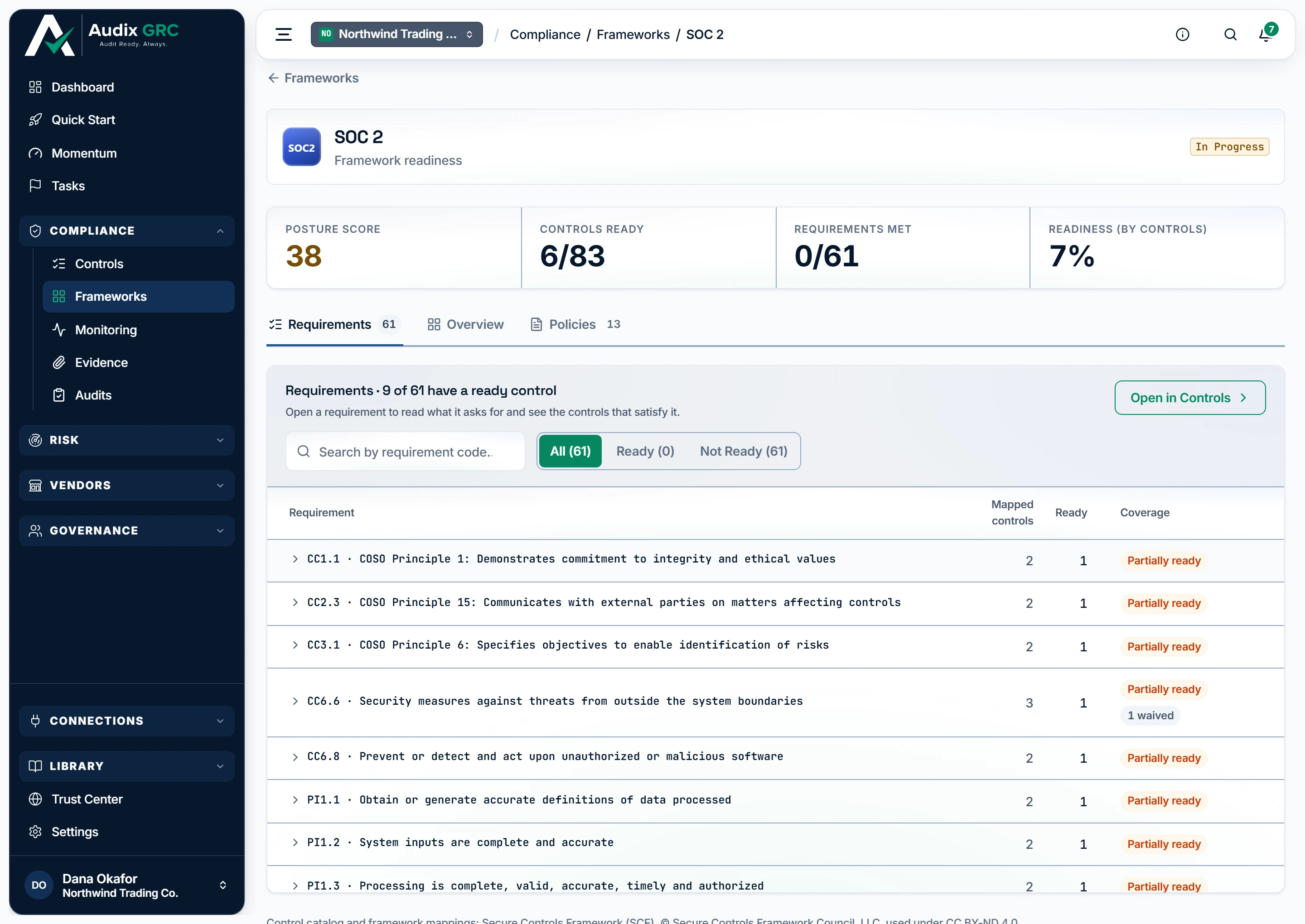
Two readiness numbers, and why they disagree
Wider than this screen: swipe sideways across the flow to follow it.
Posture score, controls ready, requirements met and readiness, then the Requirements tab, an Overview tab with the guide and the trend, and a Policies tab.
2 questions
Questions about this screen
Why does ISO 27001 show only a few policies in Audix?
In the Secure Controls Framework mapping, ISO 27001 covers clauses 4 to 10, the management system. The Annex A controls are mapped under ISO 27002, so most policies show there. Adopt both to see every policy behind your ISO work.
Why do the requirement list and Requirements met disagree on a framework?
The requirement list calls a requirement Ready only when every control mapped to it is ready. The Requirements met figure uses your own threshold over risk-weighted controls, so the two can differ.